After more than a decade of playing weddings across Michigan, here is one thing we know for sure: the best weddings are almost never the ones where everything goes exactly according to plan.
That sounds like something a wedding vendor says after something has already gone wrong. Fair. But it is true.
We have seen a ceremony delayed because someone tried to stand on a folding chair while decorating a pergola and had to be cut out of the chair before guests could enter the space. We have helped run a rented “walking on a cloud” machine after the couple found out, on the wedding day, that the company had not really explained the dry ice part. We have played through August heat, tent storms, ferry delays, power issues, timeline pivots, and more “wait, who is in charge right now?” moments than any sane person would put on a brochure.
And somehow, a lot of those nights still became incredible weddings.
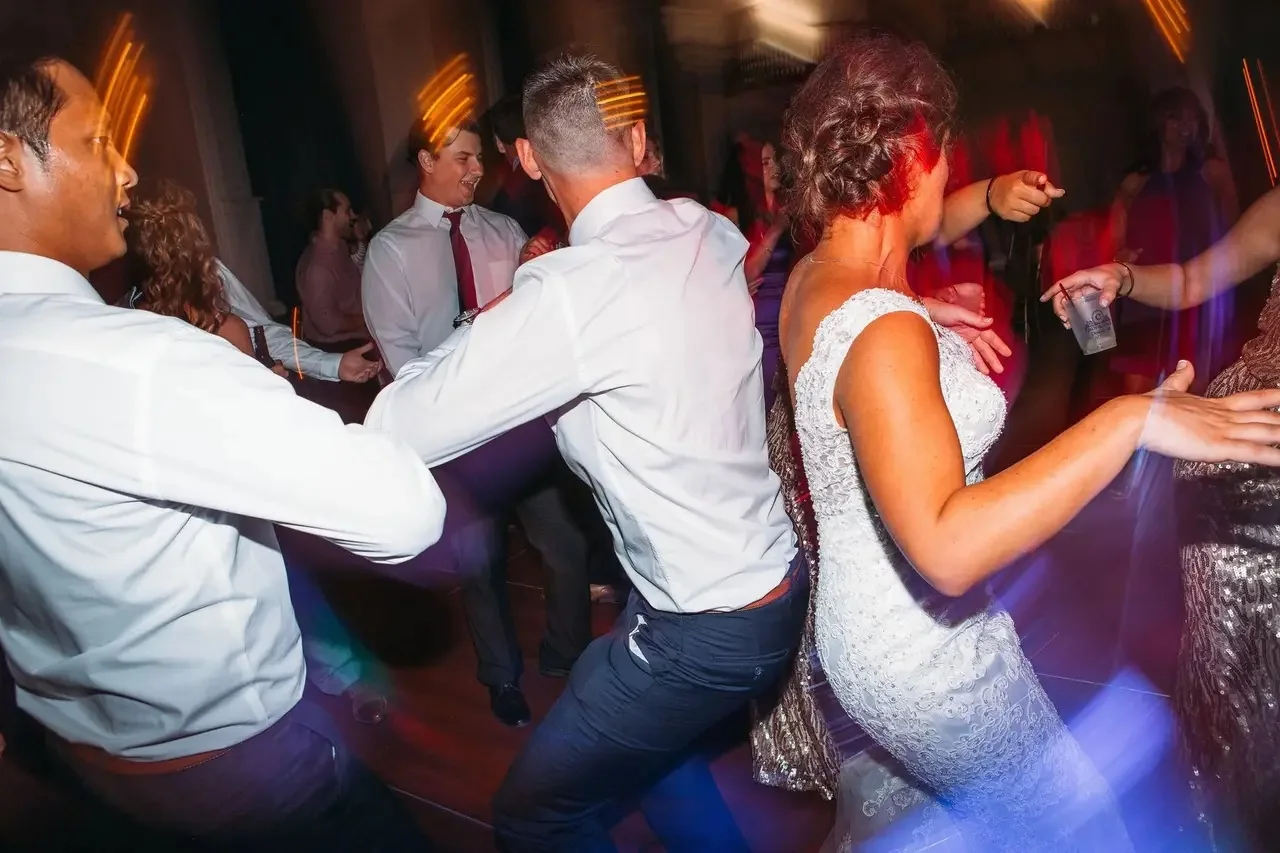
Guests remember the feeling, not the tiny details
Couples put an enormous amount of thought into the details of a wedding. That is not a bad thing. Details can be beautiful. They can make the day feel personal. They can make the room look like you.
But most guests are not grading the napkin fold. They are not keeping a mental spreadsheet of whether the charger plates matched the floral palette. They are not going home saying, “Beautiful ceremony, shame about table seven’s centerpiece height.”
For the most part, everyone at your wedding has chosen to be there because they care about you. Or at least they care enough to get dressed, drive somewhere, eat chicken politely, and clap at the right moments. They want the day to work. They want the party to be great. They want to see you happy.
What do people actually remember? The food, the music, the dance floor, the speeches that hit, the moments that felt real, and whether the room felt good to be in.
So yes, make the day beautiful. But also make time to be in it. Take a breath. Look around the room. Let yourself enjoy the fact that all these people showed up for you.
Hopefully, you only do this once. It would be a shame to spend the whole day managing tiny details while the actual wedding happens around you.
Flow matters more than people think
This is the part we say in almost every planning meeting:
That one sentence solves a lot of reception problems.
A wedding reception has a rhythm. Guests arrive, settle in, eat, listen, laugh, drink, dance, and slowly loosen up. When the timeline keeps stopping and restarting, the room never gets to build momentum.
That is why we like to stack the most important formalities toward the front of the night when possible. Grand entrance. Welcome. Blessing. Dinner. Toasts. Parent dances. First dance. Whatever matters most to you, put it somewhere people are naturally already paying attention.
Because once the party starts, stopping the room is not a small thing. Every interruption asks your guests to switch gears again. Sometimes that is worth it. Often, it is not.
We once worked a New Year’s Eve wedding where a pre-recorded family speech ran more than half an hour. The venue could not get the video working, so the room ended up listening to audio only. No visuals. Just a long, dark room full of dressed-up people who had been ready to celebrate.
Nobody was being rude. Nobody wanted the speech to fail. But you could feel the energy leak out of the room. Glasses clinked. People shifted. The buzz got put on hold.
The good news: the night recovered. The first dance reset the room, the dance floor opened, and the party ended up being great. But that is the point. Flow matters. It is not about being rigid or joyless. It is about protecting the energy you are trying to create.
We wrote more specifically about this here: The “No-Lull” Reception Timeline.
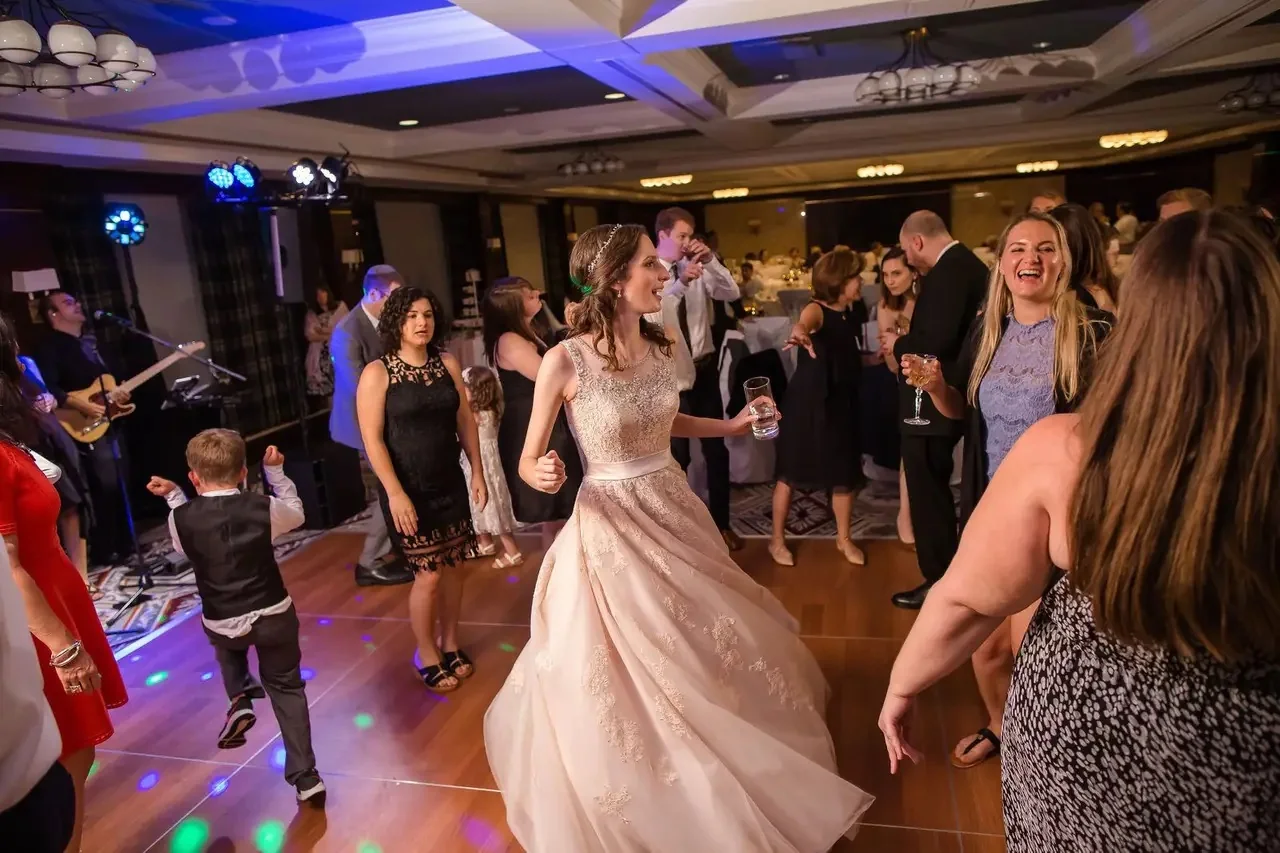
Trust creates better parties
The couples who get the best results usually do two things really well.
First, they engage in the planning process. They answer questions. They tell us what matters. They tell us what does not. They give us context about their friends, family, venue, timeline, and the kind of night they want.
Then, once the wedding day arrives, they let us do the job.
That second part matters more than people realize. A wedding reception is not just hearing your favorite playlist in a room with cake nearby. It is hosting a party for a lot of different people. Your college friends, your parents, your cousins, your coworkers, your grandparents, and that one table that somehow becomes the loudest table in the building by 9:30.
A packed dance floor usually needs some freedom. It needs the band or DJ to read the room and move with what is actually happening, not just follow a list that was made months earlier over coffee.
We have had couples say things like, “We do not love this style, but if the dance floor needs it, do it.” That is trust. And very often, those couples end up having the most fun because they are not trying to personally approve every song in real time.
The opposite can get tricky. One bride told us absolutely no country under any circumstances. Totally fair, and we take that seriously. Later, we learned her family had a specific tradition around “The Gambler” by Kenny Rogers. So now we are in the very normal wedding-band position of quietly finding the bride during her reception to ask if this specific song is allowed after all.
That is not a disaster. It is just a good example of why hard rules can make the night harder to manage than useful guidance does.
Your preferences matter. Of course they do. It is your wedding. But it is also your party, and you are the host. The goal is not to hear a perfect private playlist. The goal is to create a memory with the people you invited.
If the playlist matters more than the room, save the money and rent a speaker. We say that with love and only a medium amount of sarcasm.
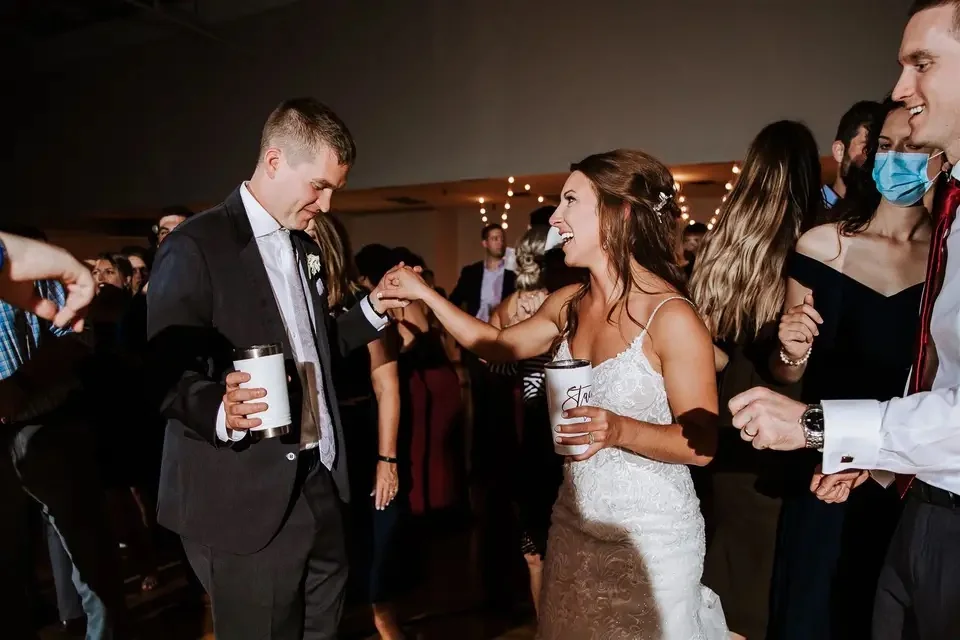
Good vendors make each other better
A wedding is not one vendor doing one job in a vacuum. It is a bunch of people trying to make one moving target feel smooth.
Great planners communicate. They are collaborative about the timeline. They tell vendors what is happening, when it is happening, and what needs to change when the day inevitably shifts.
Great photographers are ready when moments are about to happen. That sounds obvious, but it matters. When it is time for grand entrance, first dance, parent dances, or sparkler exit, the whole room should not be hunting for the person with the camera.
Great venues understand power, layout, weather, guest flow, and what a live event actually requires. Great caterers understand that dinner timing affects the entire night. Great officiants understand that a ceremony can be meaningful without becoming a full-length documentary.
The best vendors are not the ones who need everything done exactly their way. They are the ones who know their craft well enough to adjust while still protecting the couple’s day.
Too much control can be a red flag. If a vendor has no flexibility, that usually means one of two things: they are inexperienced, or they are more invested in their system than in the actual wedding happening in front of them. Neither is ideal.
We have had weddings where the band ended up helping steer the evening because the plan stopped being clear. One sweet couple had a rainy day, a shifting timeline, and a day-of coordinator who seemed to disappear from the coordination part. No villain speech needed. It happens. But at that point, someone still has to keep the evening moving.
So we checked in directly, adjusted timing, kept the couple informed, and helped get the night where it needed to go. That is not technically “playing songs.” It is still very much part of the job.
This is one reason we tell couples to think beyond song lists when they choose entertainment. A good wedding band plays music. A great wedding band helps carry the room. More on that here: What Actually Makes a Wedding Band Great.
Weather, power, ferries, and rental machines will humble everyone
Michigan weddings have range. Historic ballrooms. Golf clubs. Barns. Backyard tents. Rooftops. Waterfront ceremonies. August receptions where the air itself feels cooked. Fall weddings where the weather changes its mind four times before dinner.
You plan the best you can. Then the day shows up and gives you the real version.
During the COVID-era wedding years, everything was fluid. Guest counts changed. Locations changed. Rules changed. Tent layouts changed. Couples wanted to start their lives together and still find a way to see their people. It was a strange time to work weddings, but it also reminded us how badly people needed those nights.
Once the party got rolling, people danced. For a few hours, everyone got to act like the world was not on fire. The couples needed that. Honestly, so did we.
That period also changed the way we built our wedding setup. We moved toward separate, modular systems for ceremony, cocktail hour, and the full band. That way, a ceremony can happen in one spot, cocktail music can happen somewhere else, and the full reception setup can be ready without guests watching us sprint around with gear all afternoon.
Good systems matter because weddings do not wait for you to figure it out.
At one full-day wedding, we had to provide ceremony audio 150 feet from the stage down near a dock, including power and lapel mics. Then we moved into acoustic cocktail music under a tent. Halfway through cocktails, the sky opened. We were technically under cover, but water started pooling and splashing in from the side almost immediately.
So we moved the entire acoustic setup farther inside the tent, adjusted the spacing, kept the music going, and still started the rest of the night on time.
That is the job. Not panic. Not make it the couple’s problem. Solve the thing, then keep the day moving.
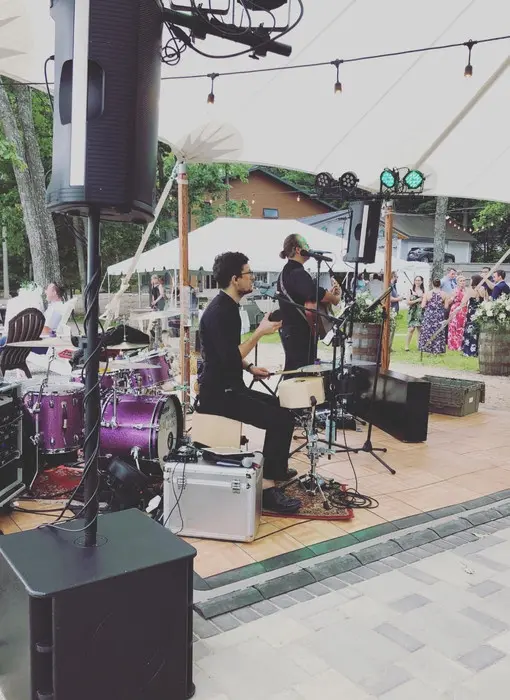
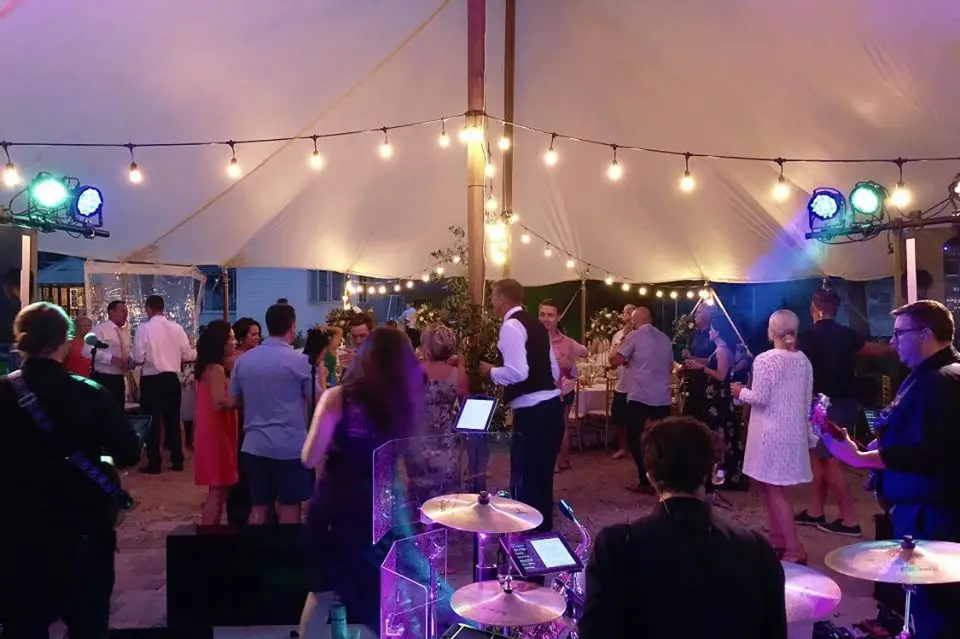
We have had August venues put the band on the same circuit as heavy air conditioning and then act surprised when breakers popped. We have had couples rent effects machines that arrived without useful instructions. We have had full production days on Mackinac Island where the gear made it across immediately, but the people had to wait in a ferry line that felt like a small music festival without the music.
By the time we reached the island, we were collecting band members in line like a very specific scavenger hunt. Horn player? Found him. Cocktail keyboard player? There he is. Everybody kept moving, we hauled gear, ran carts, hustled up the hill, and started on time.
That is the part guests rarely see. When things are going well, they should not have to.
The band’s job is bigger than the dance set
A lot of people hear “wedding band” and think, “Music after dinner.”
That is part of it. But at many weddings, we are also handling ceremony audio, microphones, processional music, cocktail hour, dinner music, grand entrance, announcements, timeline cues, first dance, parent dances, last song, and sometimes a small technical rescue mission nobody planned for.
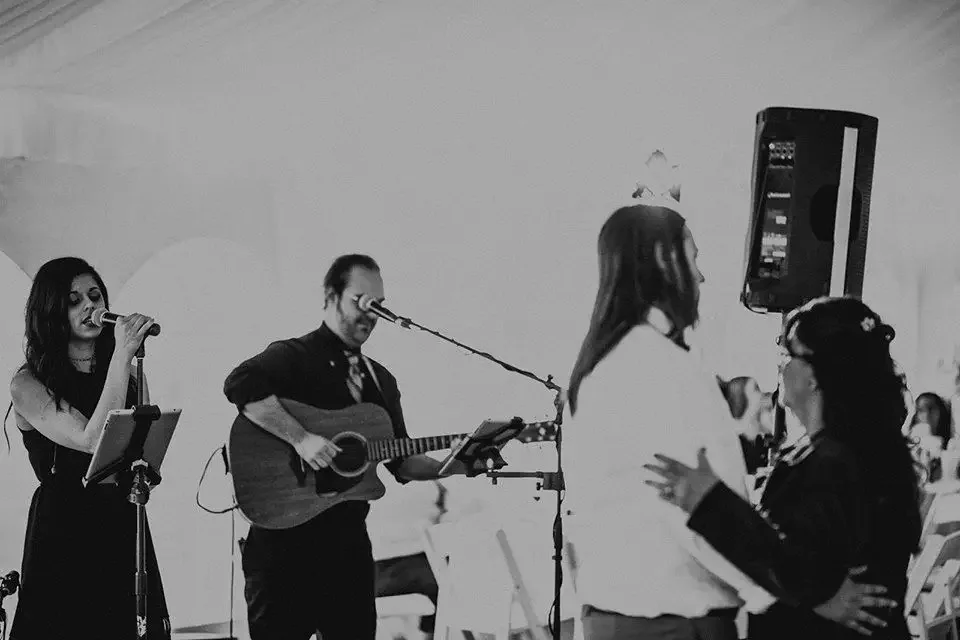
That is why the person leading the entertainment matters. With Weekend ComeBack, couples are not just booking a band and hoping the emails made it to whoever shows up. They are working directly with me through the planning process, and I am the person on the microphone the day of the wedding.
That continuity helps. I know what we talked about. I know what matters to the couple. I know which moments need to be handled carefully and which ones can breathe a little.
A good band should sound good during the party. A great wedding band should sound good at every part of the day they touch: fingerstyle guitar for ceremony, live cocktail music, clean announcements, tasteful dinner music, and then a full dance floor when it is time to let the room go.
It is not just music. It is hospitality, production, timing, and crowd psychology with instruments attached.
If you are still comparing formats, this guide may help too: Band vs DJ for Weddings in Michigan.
Weddings are supposed to be fun
Younger me thought weddings were stressful. To be fair, a lot of people around weddings really want you to believe that. There is an entire industry built around making every decision feel high stakes.
But after years of doing this, the biggest shift is simple: weddings are fun.
Yes, there are logistics. Yes, emotions run high. Yes, family dynamics can get spicy in that special “we are all dressed nicely but barely holding it together” kind of way. But underneath all of that, everyone is there to celebrate two people starting their lives together.
The formalities matter because they create memories. The photos matter because someday they end up on walls and mantels. The dinner matters because people get cranky when they are hungry. Good grief, do they get cranky.
But the point is celebration.
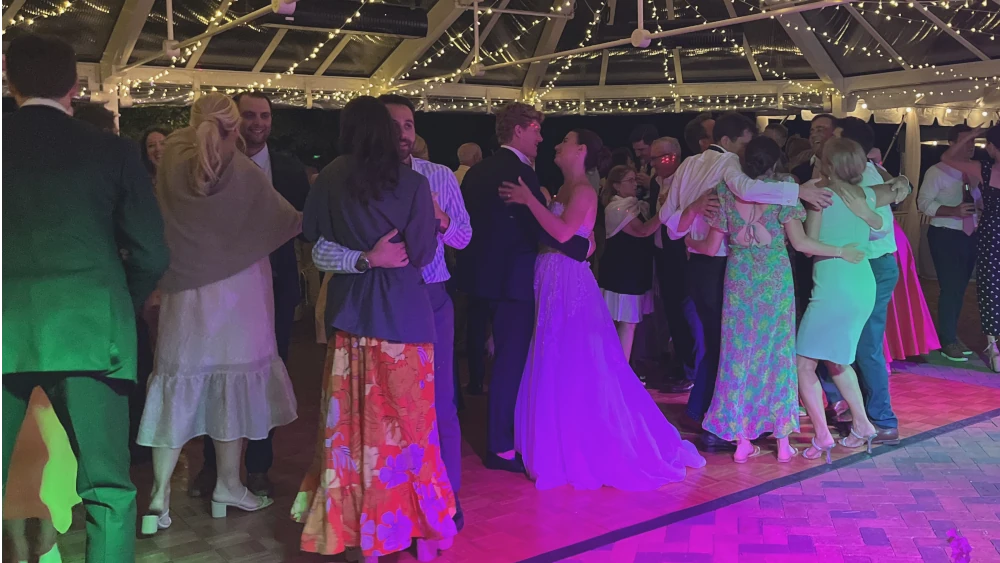
We have seen pushy parents calm down after the ceremony. We have seen quiet couples finally relax once the dance floor opens. We have seen grandparents become the key to an early hype dance floor because nothing gets a room moving faster than realizing Grandma is willing to put in work.
People want the day to go well. Let them help it go well. Let them love you. Let yourself enjoy it.
At the end, it is always about the couple
We have played loud weddings, elegant weddings, rainy weddings, backyard weddings, ballroom weddings, island weddings, golf club weddings, and weddings where the timeline looked like it had been assembled during a power outage.
The ones that stay with us are usually not the most expensive or the most elaborate. They are the ones where the couple feels completely present with each other.
Joe and Bridget’s wedding at Cascade Hills Country Club is one of those weddings I still think about.
The room was beautiful. They had trees inside the venue, which is already a strong move. But the thing that made the day memorable was how obvious it was that the whole room was there to celebrate two people who were deeply, visibly happy to be married.
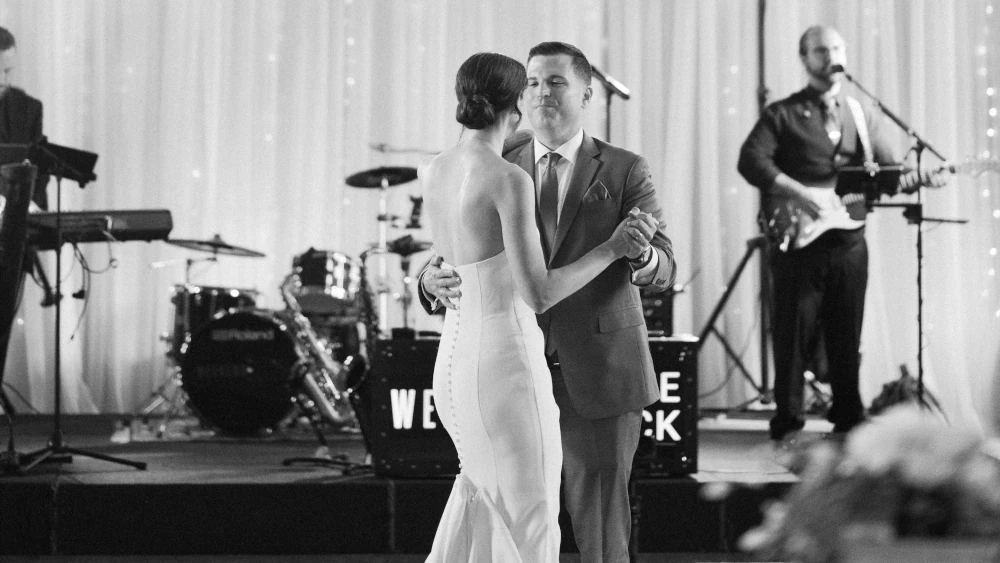
At the end of the night, they did a private last dance. That moment can feel forced if the couple is just doing it because a checklist said to. This one did not.
We helped move everyone outside for the sparkler exit. Their guests lined up outside the doors, waiting and cheering. Inside, Joe and Bridget danced through the whole song by themselves, just looking at each other and taking it in. They almost did not want to leave the room.
Then the doors opened, and they walked out to their people holding sparklers and losing their minds for them.
That is the whole thing. Not the chair covers. Not the perfect timeline. Not the exact playlist. Not whether every tiny detail landed exactly as planned.
Two people. A room full of people who love them. A night that feels like them.
That is what we are trying to protect.
Final thought
After 10+ years of Michigan weddings, we have learned that the best weddings are not perfect. They are well-supported. They are flexible. They have good flow, good people, and enough trust built into the day that one weird problem does not become the whole story.
Hire vendors you trust. Protect the flow. Do not turn the night into a hostage situation with long speeches. Give your entertainment enough room to read the party. Eat something. Take a breath. Look around.
Everyone came to celebrate with you.
Let them.
If you are planning a wedding in Detroit, Metro Detroit, or anywhere across Michigan and want entertainment that helps carry the whole day, you can start here: Weekend ComeBack Weddings. Or reach out and we will help you sanity-check what makes sense for your venue, timeline, and crowd.
No pressure. Honest answers only.